
2026-09-04 ·
Spring Gutter Checks After Heavy Delaware Valley Rainfall
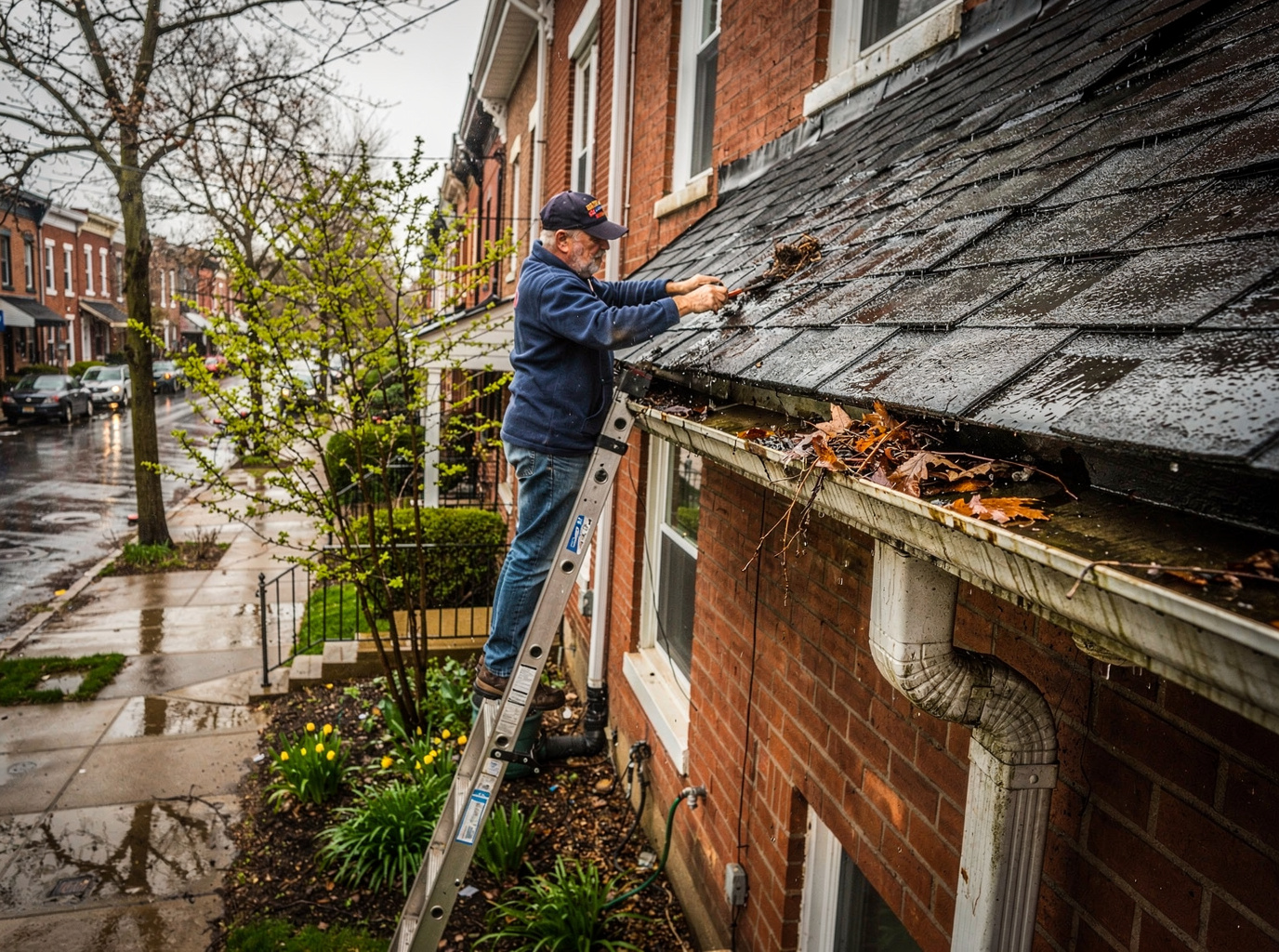
After heavy Delaware Valley rainfall, begin spring gutter checks by examining the entire system for debris accumulation and overflow signs within 48 hours of the last storm. Philadelphia's humid subtropical climate brings intense downpours that can overwhelm older systems on row homes in neighborhoods such as Center City, South Philadelphia, and Fishtown. Start at the roofline and work downward, noting any sagging sections or water stains on fascia boards common in 19th-century housing stock throughout North Philadelphia and West Philadelphia.
Inspecting for Debris Buildup After Spring Storms
Philadelphia's mix of maple, oak, and sycamore trees drops substantial debris during spring rains, especially near Wissahickon Valley Park and in Germantown or Mount Airy. Walk the roof edge on a ladder and remove wet leaves, twigs, and silt that collect in 5-inch K-style gutters typical on local row homes. In areas like Manayunk and Roxborough, steep slopes accelerate runoff and push more material into the troughs, creating blockages that force water behind the gutter and onto siding. Check inside corners and end caps first, as these spots trap moisture longer in the region's cold winter transitions. Clearing this buildup prevents ice dams next season and reduces the risk of basement seepage common in older University City foundations.
Checking for Leaks and Structural Damage
Delaware Valley rainfall volumes often exceed 2 inches in a single event, testing seams and joints on aluminum and steel gutters installed decades ago across Kensington and Northern Liberties. Run water from a hose at the top of each section and watch for drips at miter joints or where downspouts connect. Look for rust streaks or white mineral deposits indicating prolonged moisture exposure, conditions worsened by the area's freeze-thaw cycles. In South Philadelphia and Queen Village, low-lying lots direct more water toward foundations, so inspect for soil erosion around downspout exits. Document any separations wider than 1/8 inch, as these allow water to reach wooden fascia and accelerate rot in humid summers.
Evaluating Downspout and Drainage Performance
Effective drainage after heavy rains requires downspouts that move at least 1 gallon per second without backing up. Test each one by pouring several gallons of water at the gutter inlet and confirming flow reaches the splash block or storm connection. In West Philadelphia and University City near Parkside Ave, older combined sewer systems can surcharge during peak rainfall, pushing water back up downspouts. Extend downspouts at least 5 feet from the foundation in clay-heavy soils found throughout the county. Note any elbows crushed by lawn equipment or clogged with sediment from nearby construction sites in Fishtown.
Planning Upgrades for Future Storms
Homeowners in Philadelphia often benefit from adding Gutter Guards to reduce annual cleaning frequency after spring rains. These mesh covers perform well on half-round and box gutters common in historic districts like Society Hill. For properties in Mount Airy or Manayunk experiencing repeated overflow, consider Gutter Cleaning paired with seamless upgrades detailed in Gutter Installation Options for Philadelphia Row Homes. Review cost factors across zip codes in What Affects Gutter Installation Costs Across Philadelphia Zip Codes before scheduling work. A-One Gutter Contractors operates from Parkside Ave, Philadelphia, PA 19104 with hours Mon–Sat 8am–6pm and Sun 9am–2pm to handle these assessments promptly.