
2026-09-04 ·
How Philadelphia Winters Lead to Ice Dams in Gutters
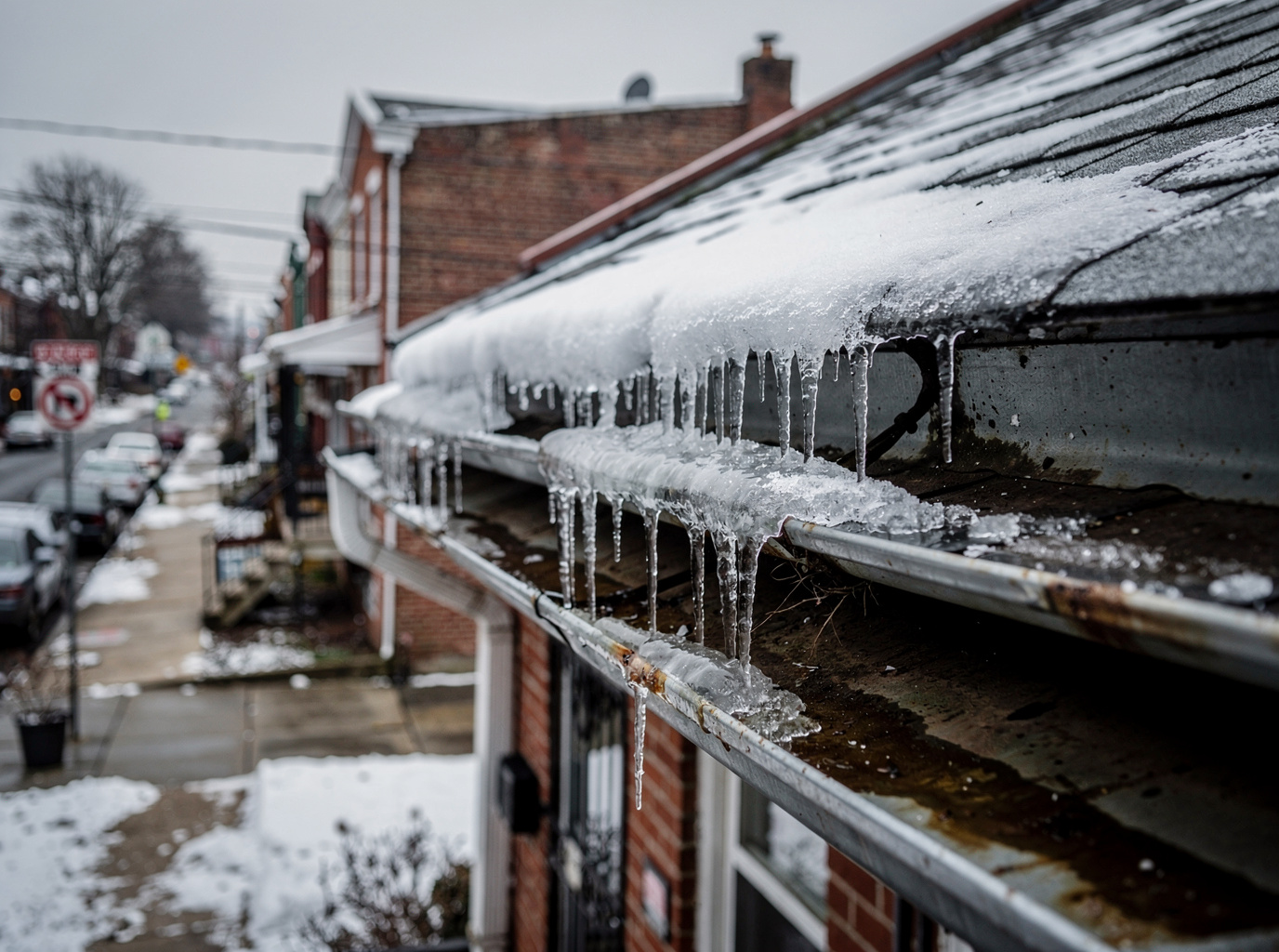
Philadelphia winters produce ice dams when 3–8 inches of snow falls and daytime highs reach the mid-30s while overnight lows drop below 25°F for three or more consecutive nights. The cycle repeats on the steep-pitch roofs common in row homes from Fishtown to Roxborough, where heat escaping through older insulation melts snow that then refreezes at the cold eaves.
Philadelphia Winter Weather Patterns That Trigger Ice Dams
The region's humid subtropical climate brings frequent freeze-thaw swings between December and February. Snow from a coastal storm melts slightly during a 35°F afternoon, then the water runs down the roof until it hits the unheated overhang and turns to ice. This repeats after each 2–4 inch snowfall, building dams thick enough to back water under shingles. Homeowners in North Philadelphia and Germantown notice the problem first on north-facing slopes that stay shaded all day. The same pattern appears less often in milder pockets near the Delaware River but still occurs once temperatures stay below freezing for 48 hours straight.
How Older Philadelphia Housing Stock Loses Heat and Forms Dams
Row homes built before 1940 in South Philadelphia, Kensington and West Philadelphia often have minimal attic insulation and single-pane windows. Warm air rises through the common walls and escapes at the roof peak, warming the metal flashing and underlayment. Snow melts in a 6–10 foot band along the ridge while the lower 3–4 feet of roof stays at outdoor temperature. The resulting water travels under the snowpack until it reaches the gutter line and freezes solid. University City three-story twins show the same issue on their rear additions where insulation was never upgraded during past renovations.
Visible Signs of Ice Dams on Philadelphia Roofs
Look for 4–12 inch ice ridges along the eaves after the third night below freezing. Icicles longer than 18 inches hanging from downspouts in Manayunk or Mount Airy indicate water is backing up. Interior water stains on second-floor ceilings near the front wall appear within 48 hours of the dam forming. In Northern Liberties and Queen Village, residents also report water entering through second-story windows when dams force meltwater behind the fascia board.
Why Standard Gutters Worsen the Problem
K-style gutters installed on many 1920s–1950s homes in Center City and East Falls sit directly against the roof edge, giving ice nowhere to expand. When the dam grows, it lifts shingles and allows water to enter the fascia. Seamless gutters with 5-inch or 6-inch profiles handle more volume but still freeze solid if the roof above them continues to lose heat. Proper pitch and larger downspouts help move water faster, yet they cannot stop the melt-refreeze cycle on their own.
Homeowners who add gutter guards reduce the amount of snow and ice that sits inside the trough, but guards alone do not address the attic heat loss that starts the process. A full gutter installation with added insulation baffles at the eaves often proves more effective on these older blocks.
Practical Steps After an Ice Dam Appears
Remove snow from the roof edge with a roof rake within 24 hours of the storm to limit further melting. Apply calcium chloride-filled socks along the dam line only after temperatures are forecast to stay below 32°F for another 48 hours. Never use a hammer or chisel on the ice. Check for interior leaks the morning after each warm spell. For repeated problems on blocks in Fishtown or Germantown, schedule a roof-edge inspection before the next winter to evaluate insulation and ventilation upgrades.
After the last freeze, review the full system during the first warm week. The post Spring Gutter Checks After Heavy Delaware Valley Rainfall outlines the exact checks that catch damage from ice dams before summer storms arrive.